
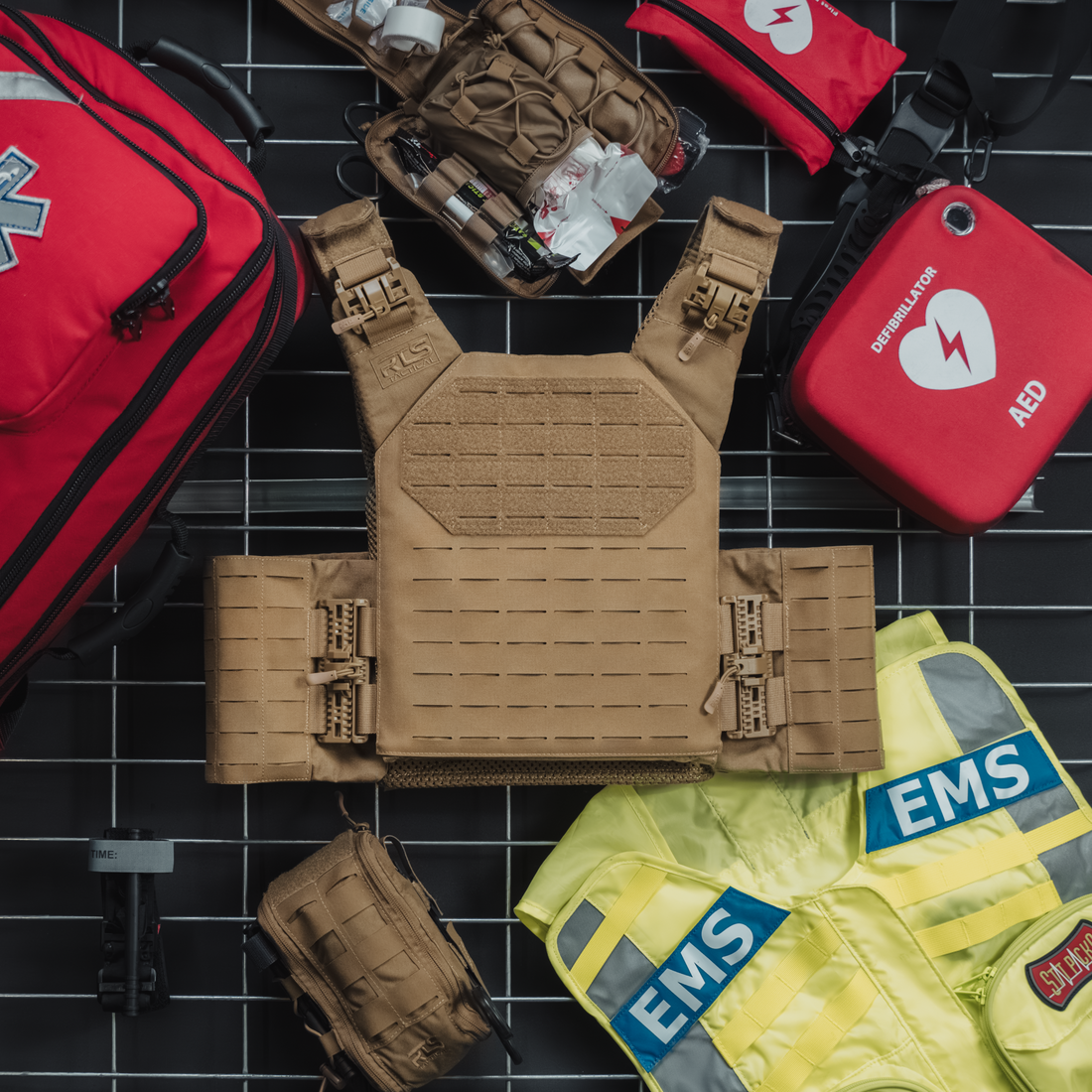
Disasters do not announce themselves. When systems fail, movement is restricted, or danger escalates, preparation determines outcomes. A civilian go-bag, sometimes called a bug-out bag or 72-hour bag, is a pre-packed kit designed to sustain mobility, safety, and self-reliance during the first critical days of disruption.
Many guides reduce go-bag planning to food and flashlights. That approach leaves critical gaps. A properly built survival go-bag combines core sustainment with medical readiness, personal protection, and practical gear that supports movement under stress. This guide breaks down what should be in a go-bag, why each category matters, and how to build a system you can rely on.
Step 1: Choose the Right Bag as Your Foundation
Your bag determines how much you can carry, how quickly you move, and how long you can stay mobile. A durable, ergonomic pack is the backbone of all go-bag essentials.
Look for a backpack with:
- MOLLE or laser-cut webbing for modular expansion
- Adjustable shoulder straps and padded back support
- Water-resistant materials and reinforced stitching
- Quick-access compartments for medical and defensive gear
Load discipline matters. Overpacking reduces endurance and increases injury risk. For most civilians, a 30–45L pack provides the best balance between capacity and mobility for a complete go-bag packing list.
Step 2: Start With Core Survival Go-Bag Essentials
Every effective go-bag list begins with items that sustain life and movement. These are the baseline essential go-bag items before adding tactical gear.
Water and Filtration
Carry water plus a backup method such as a filter or purification tablets.
Food and Energy
Pack compact, high-calorie, non-perishable meals that require little preparation.
Shelter and Weather Protection
Emergency blankets, compact tarps, or waterproof sleeping sacks help regulate body temperature and prevent exposure.
Fire and Light
Multiple ignition methods and hands-free lighting improve safety in low-visibility conditions.
Navigation and Communication
Paper maps, a compass, a charged power bank, and a radio support movement when digital systems fail.
These items form the core go-bag contents that keep you alive. Tactical additions help keep you capable when conditions worsen.

Step 3: Add Personal Protection and Go-Bag Gear
Periods of instability often increase opportunistic violence. Personal protection allows civilians to move, shelter, or render aid with greater confidence.
Key go-bag gear options include:
Soft armor panels for lightweight, concealable protection
Hard armor plates for higher-threat environments
Ballistic backpack inserts that add protection without changing your carry profile
Protection Options by Use Case
Soft Armor - Perfect for discreet protection:
- RTS Tactical Hero's Level IIIA+ NIJ 06 Concealable Vest
- RTS Tactical Commander Level IIIA (HG2) Lightweight Concealable Vest
Hard Armor - Stops high-velocity rifle rounds:
- RTS Tactical NIJ 07 RF2 Stand Alone 7800 Series 10x12 SAPI Multi Curve
- RTS Tactical NIJ 07 RF2 ICW 7200 Series - 10x12 SAPI Multi Curve
- RTS Tactical Ceramic NIJ 0101.06 Level IV Rifle Protection Plate Insert - 10 X 12
- RTS Tactical LWR5 Rifle Special Threats NIJ 0101.06 Level III+ Insert - 10X12
Everyday Protection:
- Body Armor Compression Shirts
- RTS Tactical Rifle Special Threats Backpack NIJ 0101.06 Level III+ Armor Insert
- RTS Tactical Commander Level IIIA (HG2) Backpack Panel Insert
Protection selection should match anticipated threats, weight tolerance, and movement needs. These are among the best go-bag items for defensive readiness.
Step 4: Pack a Mission-Ready IFAK
Medical emergencies are more common than armed encounters. Immediate care saves lives when professional help is delayed.
A complete IFAK is a non-negotiable part of any essential go-bag items list.
Your kit should include:
- Tourniquet
- Trauma bandages and vacuum-sealed gauze
- Hemostatic gauze
- Chest seals
- Gloves and CPR mask
- Trauma shears and medical tape
- Triage markers and glow sticks
Training matters. Medical gear is only effective when paired with proper use. Bleeding-control and trauma-response training dramatically improve outcomes.
Recommended kits:
- RTS Tactical Rapid Deploy IFAK
- RTS Tactical Rapid Deploy Complete Belt-Mount IFAK - with CAT
- RTS Tactical Rapid Deploy Mini Belt-Mount IFAK - with CAT

Step 5: Clothing, Hygiene, and Sustained Movement
A realistic go-bag packing list accounts for multi-day movement and physical wear.
Clothing and Foot Care
- Extra socks and moisture-managing layers
- Weather-appropriate gloves and headwear
- Foot care supplies to prevent blisters and infection
Hygiene and Sanitation
- Wipes and hand sanitizer
- Toothbrush and basic hygiene items
- Feminine hygiene products when applicable
These go-bag essentials protect health, morale, and endurance during extended displacement.
Step 6: Defensive Tools and Security Accessories
Some situations require more than avoidance. Defensive tools support deterrence and last-resort protection when escape is not possible.
Depending on local laws and training level, go-bag gear may include:
- Compact fixed-blade knife or multi-tool
- Non-lethal deterrents such as pepper spray
- Lawfully owned weapon accessories such as holsters or spare magazines
Recommended Accessories
All defensive items should be legal, familiar, and responsibly carried.
Step 7: Mobility, Redundancy, and Utility Items
Preparedness favors adaptability. Redundancy reduces single-point failure.
Useful go-bag essentials include:
- Paracord and repair tape
- Work gloves
- Signal whistle and mirror
- Waterproof notebook and pen
- Backup light or fire-starting tools
These additions support shelter building, signaling, repairs, and coordination in unpredictable conditions.
Step 8: Documents, Cash, and Communication Planning
A good go-bag goes beyond gear, including:
- Copies of identification and emergency contacts
- Small-denomination cash for grid-down scenarios
- Family or group communication plans and rally points
Planning turns equipment into capability.
Final Step: Customize and Maintain Your Go-Bag
No two bags should be identical. Tailor your go-bag contents based on:
- Urban, suburban, or rural conditions
- Family, medical, or pet needs
- Expected duration of displacement
Test your gear, practice access, and update supplies every six months. A survival go-bag is only effective when it reflects real conditions and current needs.

RTS Tactical: Preparedness Builds Freedom
A go-bag reflects responsibility, not fear. Preparation preserves choice when options narrow. The right mix of survival essentials, medical readiness, and protective gear transforms a backpack into a tool for confidence and action.
RTS Tactical designs American-manufactured body armor and med kits for protectors who refuse to stand still when it matters. When preparation meets purpose, readiness becomes strength.
Gear up. Stand strong. Be fearless.